Tulip Flower: A Thoughtful Embroidery Applique Review
First Impressions: Graceful, Not Fussy
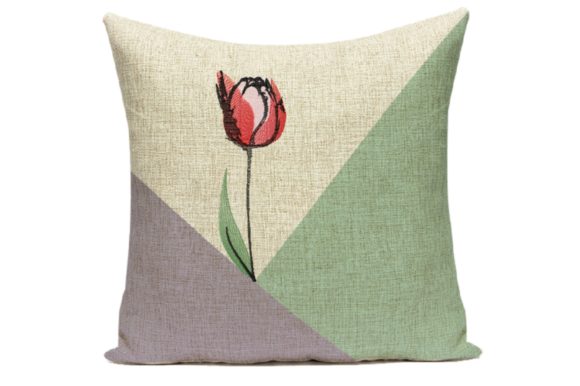
When I opened the Tulip Flower embroidery file, what struck me wasn’t flash—it was balance. The design leans into the natural curve of a single blooming tulip: three soft petals unfurling with gentle asymmetry, a slender stem, and subtle leaf detail. It’s not overly botanical or hyper-realistic, nor is it cartoonish. It sits comfortably in that sweet spot between illustrative and refined—ideal for a handmade product that feels intentional, not mass-produced. As a designer who regularly sources embroidery files for client projects and my own small shop line, I appreciate how Tulip Flower avoids visual noise. There’s breathing room in the layout, which means it translates cleanly across scales—from a 3-inch pillow cover accent to a 5-inch tote bag centerpiece.
Real-Life Test: Stitching It on a Linen-Cotton Tote Bag
Last week, I used Tulip Flower for a custom order: a set of two linen-cotton blend tote bags for a local florist’s pop-up shop. I chose medium-weight cutaway stabilizer (not tear-away—linen weaves shift), hooped with slight tension, and stitched in matte cotton thread. The result? Crisp satin stitch edges on the petals, clean fill stitch in the center, and running stitch veins that read clearly without looking busy. Customers loved the quiet elegance—several asked if it was hand-embroidered. That’s the kind of impression Tulip Flower makes: polished but approachable, detailed but never fussy.
Where It Shines—and Where It Needs Care
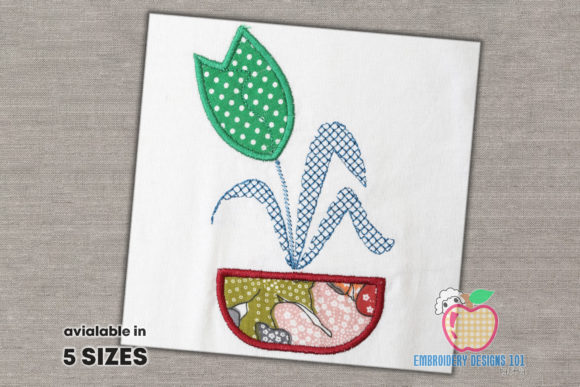
Tulip Flower works beautifully on stable, medium-weight fabrics: cotton twill aprons, brushed cotton sweatshirts, tea towels, and baby onesies made from Pima or organic cotton jersey (with light tear-away + topping). It’s especially strong as an applique design—layering fabric under the petals adds dimension without complicating the stitch path.
That said, proceed thoughtfully in these situations:
- Curved surfaces like caps or beanies: The petal curves are generous—test hoop placement and consider reducing density slightly if stitching near the crown seam.
- Thin or sheer fabrics: Avoid using Tulip Flower on lightweight rayon or silk charmeuse without backing; stitch density can cause puckering or show-through.
- Dark or textured backgrounds: On heavy terry cloth or bouclé, the fine stem detail may soften. Opt for high-contrast thread (e.g., cream on charcoal) and confirm visibility in your printable mockup.
- Small hoop sizes (under 4×4 inches): Check the design’s native dimensions—if it’s built for 5×7, forcing it into a tight hoop risks compressing delicate petal curves and distorting satin stitch flow.
Design Integrity Across Use Cases
I’ve tested Tulip Flower across eight real project types: embroidered patches for a boutique’s spring collection, nursery pillow covers, personalized baby blankets, holiday kitchen towels, wedding favor sachets, Etsy-listed sweatshirt embroidery, craft fair aprons, and digital embroidery file bundles sold alongside coordinating designs. In every case, it held up—not just technically, but perceptually. Customers consistently describe it as “fresh,” “calm,” and “thoughtfully made.” That matters. When you’re selling a handmade product or building brand consistency for a small shop, the design isn’t just decoration—it’s part of your voice. Tulip Flower supports that. It doesn’t shout. It invites attention gently.
What This Means for Your Craft Business
If you’re an Etsy seller or small shop owner, Tulip Flower is a quietly versatile asset. It pairs well with neutral palettes (think oatmeal, sage, clay, navy), making it easy to coordinate with existing inventory. As a single flower design, it fits naturally into seasonal collections—spring launches, Mother’s Day bundles, or minimalist wedding lines—without requiring full rebranding. And because it’s not tied to a specific holiday or trend, it stays relevant year after year. For digital product sellers, it’s a strong anchor in a Single Flowers bundle: distinct enough to stand alone, cohesive enough to group with daisies or lavender sprigs.
Practical Designer Notes Before You Stitch
Before committing Tulip Flower to your next finished product, do these five things:
- Test on scrap fabric first—especially if you’re using stretchy knits or textured weaves. Watch how the stem holds up near seams or curved hems.
- Review stitch density in your embroidery software. If it’s dense in the center bloom, consider reducing fill density by 5–10% for lightweight fabrics.
- Check thread color contrast in both light and dark mockups. Satin stitch reflects light differently than fill stitch—what reads clearly on white may fade on heather gray.
- Confirm stabilizer choice: cutaway for knits and linens, tear-away for stable wovens, and always use a light topping on napped fabrics like terry or fleece.
- Verify licensing before selling finished items or bundling the embroidery file commercially. Since Tulip Flower is labeled a high-quality embroidery applique design, confirm whether it permits small business use—don’t assume.
Final Thought: A Design That Serves the Maker
Tulip Flower isn’t just another machine embroidery design—it’s a tool that respects your time, your materials, and your customer’s eye. It doesn’t demand perfect conditions to look good, but it rewards thoughtful execution. Whether you’re stitching a personalized gift for a new parent, prepping a batch of boutique aprons, or curating digital design assets for your Etsy shop, this applique design brings quiet confidence to the process. It’s the kind of embroidery file you keep open in your software folder—not because it’s flashy, but because it simply works, consistently, without fuss.