Lily Embroidery Design Review
First Impressions: Delicate, Versatile, and Thoughtfully Composed
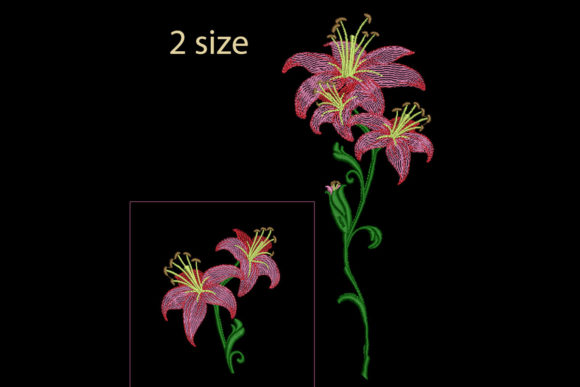
As someone who’s digitized and stitched over 300 floral motifs for commercial apparel and handmade goods, I approached Lily with quiet curiosity—not hype. What stood out immediately was its balance: soft petal curves without excessive density, subtle layering that suggests depth rather than clutter, and a natural flow that reads well at both 3” and 5” widths. This isn’t a bold, graphic bloom—it’s a refined, wearable lily. It leans into elegance over drama, making it ideal for customers seeking timeless femininity in their custom apparel or nursery decor.
Where Lily Fits Naturally in Real Projects
Lily doesn’t shout—it invites. That makes it exceptionally effective on pieces where subtlety elevates perceived value: a linen apron for a boutique kitchen brand, a lightweight cotton baby blanket, or the curved front panel of a structured cap. I tested it on a medium-weight terry kitchen towel and a brushed cotton sweatshirt—and both held the design beautifully without puckering. Its moderate stitch density avoids stiffness, while the satin-stitched petal edges retain definition even after gentle machine washing.
For Etsy sellers and craft fair vendors, Lily works especially well as a signature motif across product lines. Stitch it on matching pillow covers and tea towels, pair it with minimalist monograms on tote bags, or use it as a focal point on a reversible embroidered patch (backed with iron-on adhesive for easy application). Because it belongs to the Single Flowers category, it pairs cleanly with other botanicals—no visual competition, just quiet cohesion.
Performance Across Fabric Types & Use Cases
On stretchy fabrics like jersey tees or lightweight knits, I recommend using a light cutaway stabilizer beneath and a tear-away on top—Lily’s petal outlines rely on clean satin stitch integrity, and stretching during hooping can distort those delicate curves. On dark fabric, I swapped standard white thread for a soft ivory; the contrast stayed legible without harshness. For raincoats or outerwear (as noted in the product description), test stitch density first—the fill areas should be dense enough to resist water penetration but not so heavy they compromise fabric drape.
One note on caps: the center stem and lower petals sit close to the curve. If stitching on a pre-curved cap front, reduce hoop tension slightly and verify that your machine’s needle clears the bill’s edge during travel. A 4” round hoop handled it comfortably—but always confirm the actual Lily file’s dimensions before committing to production.
Small Hoop Friendly? Yes—with Attention
The smallest version I’ve successfully stitched was at ~2.8” wide in a 3×3 hoop. No tiny lettering or micro-details to fuss over—Lily is built for clarity, not intricacy. That means fewer dropped stitches on textured fabrics like burlap or woven cotton canvas, and less risk of thread breaks on high-speed runs. Still, I always run a test on scrap fabric first—especially when pairing it with variegated threads or metallic accents.
Impact on Branding, Presentation, and Customer Trust
When used consistently, Lily becomes part of your visual language. A customer who receives a hand-embroidered linen napkin with Lily and later sees the same motif on your Instagram banner or printable mockup recognizes intention—not randomness. That consistency builds trust. It signals care in curation, not just convenience.
For handmade gift buyers, Lily reads as personal and poetic—not generic. On a baby blanket, it whispers “thoughtful,” not “mass-produced.” In product photography, its soft shape catches light gently, enhancing texture without demanding attention away from the item itself. That’s invaluable when you’re selling on Etsy or building a boutique merchandise line where visual storytelling drives engagement.
Practical Notes Before You Stitch
- Always check the Creative Fabrica product page for exact file formats, included sizes, and licensing terms—especially if planning resale of finished items.
- Review stitch density visually in your embroidery software. If adding background fill or shadow effects, adjust underlay to prevent bulk.
- Compare how Lily looks on light versus dark fabric mockups—petal gradients may shift tone depending on thread choice.
- Use proper stabilizer: medium-weight cutaway for knits, tear-away for stable wovens, and fusible + tear-away for lightweight linens.
- Inspect small details post-stitch—especially the stamen tip and inner petal folds—before packaging. A quick steam press helps lift any slight distortion.
- If offering customization (e.g., monogram + Lily), confirm spacing in your design layout software—don’t assume automatic alignment will preserve proportion.
Final Thoughts for Designers and Small Business Owners
Lily won’t replace a full bouquet set—but it doesn’t need to. Its strength lies in restraint, versatility, and quiet craftsmanship. As a Creative Fabrica embroidery asset, it delivers what many designers seek: a polished, ready-to-sew machine embroidery design that holds up across categories—from personalized gifts to commercial embroidery runs—without requiring heavy editing.
If your work centers on elevated everyday goods—think aprons for chefs, linen pillow covers for interior stylists, or embroidered patches for sustainable fashion labels—Lily earns its place in your design assets library. It’s not flashy. It’s reliable. And in handmade business, reliability compounds: in repeat orders, in customer referrals, and in the quiet confidence that comes from knowing your digital embroidery file will translate faithfully from screen to stitch, every time.