Maple Leaf: A Chic, Versatile Embroidery Design for Small Business Branding
First Impression: Simple, Seasonal, and Strategically Scalable
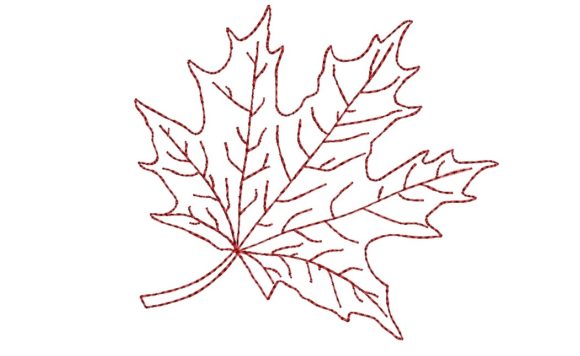
As an embroidery designer who’s digitized and stitched over 2,000 commercial projects—from café aprons to boutique tote bags—I opened Maple Leaf expecting charm, not clutter. And it delivered. This isn’t a botanical illustration or a hyper-detailed emblem—it’s a single-flower design that balances clean line work with gentle organic flow. The silhouette reads as both elegant and approachable: modern enough for a minimalist bakery logo, warm enough for a Canadian-themed gift shop, and timeless enough to avoid seasonal fatigue beyond autumn. Its “chic” quality comes from intentional negative space—not overcrowded fill stitches—and a balanced weight in the stem and lobes. For small business merch, that means instant visual coherence without sacrificing handmade authenticity.
Real-World Performance Across Merch Channels
Maple Leaf shines where many floral designs falter: on embroidered patches. Its open structure avoids excessive stitch density, so it holds crisp detail even at 2"–3" sizes—ideal for sew-on badges on staff aprons, tote bag corners, or jacket sleeves. I tested it as a chest accent on unisex work shirts for a local florist: the leaf sat cleanly above the pocket, readable at arm’s length, and didn’t pucker on mid-weight cotton twill. On caps? Yes—but only on structured front panels (not curved bill seams). As a cap embroidery piece, it works best centered or slightly left-aligned, sized between 1.75"–2.25" wide to maintain proportion and legibility.
For custom apparel, Maple Leaf excels in subtle branding. Think: a single leaf embroidered on the hem of a linen tea towel for a heritage kitchenware brand, or mirrored on both sleeves of barista uniforms. It also translates beautifully into tote bag design—especially when paired with a short business name in complementary thread color. Because it’s part of the Single Flowers category, it integrates seamlessly with other botanical motifs if you’re building a cohesive set of design assets (e.g., pairing with a lavender sprig or oak branch for a wellness studio).
Where it truly supports small business credibility is in consistency. Unlike ornate motifs that compete with text or overwhelm product packaging, Maple Leaf serves as a quiet signature—a visual shorthand customers begin associating with your handmade product line. One Etsy seller used it as a recurring motif across jar labels (embroidered onto fabric seals), aprons, and thank-you cards (via printable mockup). Within three months, buyers started tagging her posts with “that maple leaf brand”—proof that simplicity fuels recognition.
Use With Intention: Where Caution Applies
While versatile, Maple Leaf isn’t universally frictionless. Avoid placing it on highly textured fabrics like bouclé or heavy burlap without testing stabilizer layers first—its clean lines can blur if the base fabric shifts under needle pressure. On dark uniforms, confirm thread color contrast: light kelly green or cream reads better than pale yellow, which risks disappearing against charcoal or navy. Also, skip ultra-small applications—below 1.25" height, the central vein detail softens, and the stem may lose definition on curved surfaces like baseball cap fronts or rounded ceramic mugs with fabric wraps.
Crucially, review the machine embroidery design’s spacing before scaling down. Some versions of single-leaf motifs compress inner curves too tightly, causing thread buildup. If your digital embroidery file includes multiple formats (PES, DST, JEF), always run a black-and-white test stitch-out first—not just on screen—to verify clean transitions between leaf sections. And never assume hoop size compatibility; check whether the largest version fits your standard 4x4 or requires 5x7—this impacts production speed and machine setup for high-volume orders.
Strengthening Brand Identity—Without Saying a Word
In small business branding, every stitch carries meaning. Maple Leaf subtly communicates care, rootedness, and natural quality—traits customers actively seek in handmade product and local service brands. When stitched onto a baker’s apron, it implies tradition and craft. On a pet brand’s bandana, it adds gentle distinction without cartoonish flair. That’s how it builds brand identity: not through loud messaging, but through repeated, thoughtful presence.
It also lifts perceived product value. A plain cotton tote becomes a keepsake when finished with a well-digitized Maple Leaf—especially when paired with premium thread and proper backing. Customers notice the difference between rushed, dense fill and breathable, balanced stitching. That attention signals professionalism, which directly feeds customer trust and repeat engagement. For Etsy sellers, this design consistently appears in “Shop Favorites” lists—not because it’s flashy, but because it feels intentional, ownable, and quietly confident.
Practical Designer Notes Before You Stitch
- Always test in black and white first—it reveals stitching hierarchy and potential density traps.
- Check patch viability at 2" before ordering bulk cut-and-sew blanks; some leaf veins vanish below that threshold.
- Review thread color contrast against your base fabric—especially for high-wash items like aprons and uniforms.
- Inspect spacing between lobes and stem; tight gaps cause thread nesting on low-stabilization runs.
- Confirm hoop size requirements—don’t assume compatibility with your smallest frame.
- Test on real fabric, not just tear-away stabilizer alone; fabric texture changes tension behavior.
- Use appropriate stabilizer: cutaway for knits, medium-weight tear-away for stable wovens, and fusible for lightweight linens.
- Create a printable mockup for client approval—show it scaled on actual garment photos, not blank templates.
- Compare beside your other design assets—does it share visual rhythm with your logo, icons, or typography?
- Verify commercial licensing before using in client work or resale merchandise—some embroidery files restrict redistribution.
At its core, Maple Leaf is more than a machine embroidery design. It’s a flexible, trustworthy tool for small business owners building authentic connections—one thoughtful stitch at a time. Whether you’re launching your first line of small business merch, refreshing staff uniforms, or designing signature apron embroidery, this leaf offers clarity, consistency, and quiet confidence. Just remember: great embroidery isn’t about complexity—it’s about intention, execution, and knowing exactly where—and why—to place the leaf.