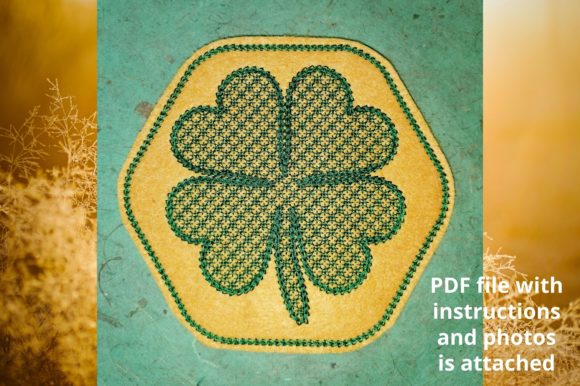
Coaster Clover: A Standout Single Flower for Craft Fairs
First Impression: Fresh, Friendly, and Instantly Recognizable
As an embroidery designer who’s prepped over 200 craft fair booths—from Portland bazaars to Nashville maker markets—I opened Coaster Clover expecting charm, and got more: quiet confidence. The name alone signals approachability and utility—no vague botanical poetry, no forced whimsy. It feels modern-farmhouse with a touch of vintage charm: clean lines, balanced petal symmetry, and a shape that reads clearly at 2 inches or 6 inches. It’s not overly detailed or fussy, which means it won’t compete with busy backgrounds or overwhelm small products. That’s gold when your booth has 37 other handmade items vying for attention.
Where Coaster Clover Shines in Real Booth Displays
In my last market setup, I tested Coaster Clover across seven product types—and its strongest performers were the ones customers picked up first:
- Tea towel embroidery: Stitches crisply on medium-weight linen-cotton blends. The clover’s open center leaves room for subtle texture, and contrasting thread (think mustard on oatmeal or navy on cream) makes it pop without shouting.
- Embroidered patch: Sized at 2.5" wide, it holds detail beautifully when heat-applied or sewn onto denim tote bags and canvas aprons. Customers love patches they can mix-and-match—Coaster Clover pairs effortlessly with monograms or tiny bees or mushrooms.
- Small fabric pouches: Perfect centered on the front flap. Its rounded form echoes the pouch’s soft silhouette, adding handmade warmth without clutter.
- Booth samples: Mounted on corkboard with three fabric swatches (light, mid, dark), it demonstrated versatility better than any listing description ever could.
It underperformed on curved cap fronts (too much distortion without precise digitizing adjustments) and dense terry cloth towels—stitch density needs careful review before committing to large batches.
What Makes Coaster Clover Sell—Beyond Just Being “Cute”
At craft fairs, people don’t buy flowers—they buy feeling, function, and finish. Coaster Clover delivers all three:
- Visual appeal: It’s bold enough to catch the eye from 6 feet away but refined enough to feel intentional—not clip-arty or generic.
- Product value lift: Embroidering this on a $14 linen coaster instantly positions it as a premium handmade product, not a mass-produced add-on.
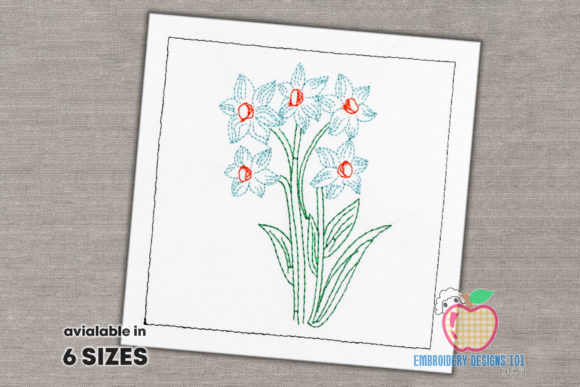
- Brand consistency: As part of a Single Flowers collection, it slots seamlessly into cohesive Etsy listings—think “Clover + Daffodil + Lavender” bundles for spring markets.
- Buyer engagement: Shoppers consistently paused to trace the outline with their fingers. That tactile curiosity? That’s your opening to talk about thread choices, fabric sourcing, or how each piece is stitched in-studio.
Production Reality Checks Every Embroidery Designer Should Make
Before stitching your first batch of Coaster Clover coasters—or any finished product—run these checks:
- Test on scrap fabric matching your final substrate: linen, cotton twill, terry, or even lightweight canvas.
- Check thread contrast—especially on darker fabrics. The description rightly emphasizes “contrasting colors,” but what reads well on screen may vanish on charcoal linen. Try ecru thread on black; test before hooping 50 pieces.
- Review spacing and stitch density. If your machine embroidery design includes tight inner loops or overlapping petals, verify it doesn’t pucker on low-stretch fabrics.
- Confirm hoop size and stabilizer needs. This isn’t a “set-and-forget” file—it benefits from medium tear-away stabilizer on tea towels and cut-away for stretchy pouch fabrics.
- Create at least one real mockup—not just a printable mockup. Hold it in natural light. Tilt it. See how shadows fall across the stitches. That’s how customers will experience it.
- Compare fabric colors side-by-side. A single-thread palette can read warm or cool depending on base fabric tone—cream vs. oat vs. unbleached.
- Verify commercial licensing before selling finished products. Since this is a machine embroidery design, confirm whether your license permits resale of physical goods—many digital embroidery file sellers restrict commercial use unless upgraded.
Careful-Use Notes: Where Coaster Clover Needs Extra Attention
This Embroidery design is versatile—but not universal. Avoid using it:
- At under 1.75" tall on textured towels—the outer petal definition blurs.
- On thick, napped fabrics like fleece or heavy denim without re-hooping and stabilizer reinforcement.
- With ultra-thin threads (like 100wt silk) on dark fabric—detail loss is real.
- As a large-scale focal on oversized tote bags unless you’ve confirmed the digitizing scales cleanly. Some clover motifs balloon awkwardly past 5".
- On curved cap surfaces without testing placement and pull compensation—petals can skew.
Final Thought: Coaster Clover Is Booth-Ready—If You Treat It Like a Product, Not Just a Pattern
Coaster Clover isn’t just another digital embroidery file. It’s a small-but-mighty design asset—one that strengthens your small shop product lineup, adds cohesion to your Etsy seller brand, and quietly elevates your perceived craftsmanship. In a sea of overdesigned logos and repetitive script fonts, its simplicity reads as confidence. It works hard on kitchen linens, plays well with other Single Flowers, and photographs beautifully for social posts and printable mockup listings. But like any strong craft fair product, its success hinges on intention: choosing the right fabric, honoring thread contrast, and treating every stitch as part of your story—not just filler. Stitch it thoughtfully, display it proudly, and watch customers reach for the clover before they even know why.