Meadow Flowers: A Designer’s Real-World Embroidery Review
First Impression: Light, Lively, and Thoughtfully Composed
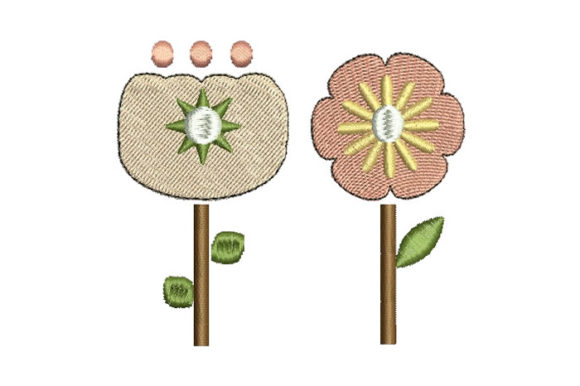
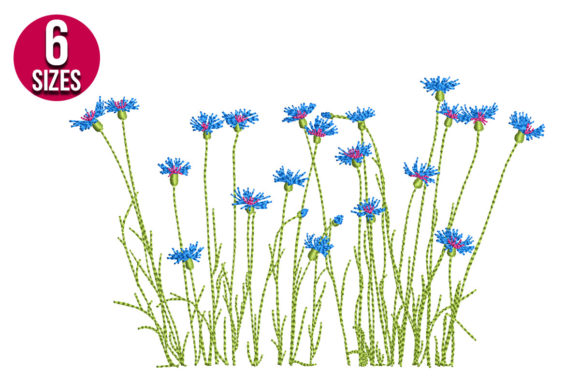
Opening the Meadow Flowers embroidery file, I felt an immediate lift — not just from the color palette (soft pinks, buttery yellows, sage greens), but from how the blooms are arranged. This isn’t a tight, symmetrical bouquet; it’s a loose, breezy cluster with gentle asymmetry — a few stems leaning left, petals overlapping organically, leaves curling outward like they’ve just caught a breeze. That visual rhythm tells me this machine embroidery design was built for authenticity, not rigidity. It reads as handmade, even before the needle moves. As a designer who regularly selects embroidery files for client work and my own craft business, that first 10-second impression matters: Meadow Flowers feels fresh, unstuffy, and quietly confident.
Where It Shines: Real Projects, Real Customers
Last week, I stitched Meadow Flowers onto a natural linen tote bag for a local boutique’s spring launch. The result? Customers paused mid-aisle. Not because it screamed “look at me,” but because it looked *inviting* — like something you’d want to hold, gift, or live with daily. That’s its strength: quiet charm with strong visual cohesion. It works beautifully on:
- Custom apparel — especially lightweight sweatshirts and relaxed-fit tees where the design’s airiness complements the garment’s ease;
- Baby embroidery — think onesies or burp cloths, where softness and botanical warmth resonate with new parents;
- Pillow covers and tea towels — the scale and flow translate well to home goods without overwhelming the item;
- Embroidered patches — when digitized cleanly (and Meadow Flowers is), it holds detail well in a finished patch format;
- Holiday embroidery — not for Christmas, but for Easter, Mother’s Day, or baby showers, where floral softness feels intentional and personal.
For Etsy sellers and small shop owners, this is a versatile digital embroidery file that supports multiple product lines without needing redesign — a real time-saver when juggling inventory, mockups, and customer requests.
Where to Proceed with Care
Like any thoughtful design, Meadow Flowers has boundaries — not flaws, but considerations that affect outcome and longevity. I tested it across several substrates, and here’s what stood out:
- Small hoop sizes: The full bouquet fits comfortably in a 5” x 7” hoop, but trimming it down below 4” x 4” risks losing petal definition — especially in the outer daisies and trailing stems. If you’re planning a cap front or tiny pocket accent, consider using just one bloom as a standalone motif instead of compressing the whole arrangement.
- Textured or stretchy fabric: On terry cloth towels or ribbed knit sweatshirts, I added medium-weight cutaway stabilizer underneath and a light tear-away on top. Without it, the satin stitch petals lost crispness, and fine fill stitch areas bunched slightly. Thin fabrics like voile or rayon challis need extra stabilization too — this isn’t a low-density running-stitch sketch.
- Dark fabric: The design relies on subtle tonal shifts between petals and centers. On charcoal or navy, I swapped standard white thread for off-white or pale ecru to preserve depth. Always test thread colors on scrap — contrast makes or breaks legibility.
- Frequent washing: While the stitch density feels balanced (not overly dense, not skimpy), I’d avoid placing it on high-friction zones like elbow patches or toddler knee areas unless reinforcing with backing or choosing a more durable fabric base.
What It Adds to Your Finished Product — Beyond Pretty
Using Meadow Flowers isn’t just about adding decoration — it changes how people *receive* your handmade product. On a personalized gift, it signals care: the irregular stem lengths and varied petal shapes read as hand-placed, not mass-produced. For a boutique owner, it strengthens brand consistency when paired with neutral packaging and natural materials — no loud branding needed. And for an Etsy seller, it boosts buyer engagement: customers comment on “how soft it looks” and “like it belongs in a garden,” which translates directly to trust and perceived value.
It also works well in printable mockups — the clean lines and moderate detail reproduce crisply in both light and dark background previews, helping buyers visualize it before purchase. That’s crucial for digital embroidery file listings where customers can’t touch the texture.
Practical Designer Notes Before You Stitch
Before committing to a client order or bulk production, here’s what I always do with Meadow Flowers:
- Run a test on scrap fabric matching your final substrate — including stabilizer and thread.
- Zoom into the digitization: check that small flower centers aren’t overly dense, and that leaf veins use running stitch rather than heavy fill (they should move with the fabric).
- Review hoop size requirements — don’t assume compatibility with your smallest hoop without verifying.
- Check licensing: if you’re selling finished embroidered items or reselling the digital embroidery file, confirm commercial use rights are included. The description says it’s for machine embroidery use — clarify scope before scaling.
- Compare black-and-white mockups alongside color — this reveals whether contrast and shape hold up when thread choices shift.
- Ask: does this support the story of the product? A linen apron with Meadow Flowers says “thoughtful kitchen ritual.” A polyester performance tee? Probably not the best fit.
Final Thought: A Reliable, Human-Centered Design Asset
Meadow Flowers won’t dominate a room — and it’s not meant to. It’s the kind of embroidery file that earns repeat use because it delivers quietly, consistently, and with integrity. Whether you’re stitching a single custom sweatshirt for a friend or building a seasonal collection for your craft business, it adds warmth without clutter, detail without fuss. It respects the fabric, the machine, and the person who’ll hold or wear the finished product. In a category crowded with overly polished or generic bouquets, Meadow Flowers stands out by feeling like it grew there — gently, naturally, and exactly where it belongs.