Good Vibes Retro: A Smart Embroidery Choice for Small Business Brands
First Impression: Friendly, Authentic, and Instantly Recognizable
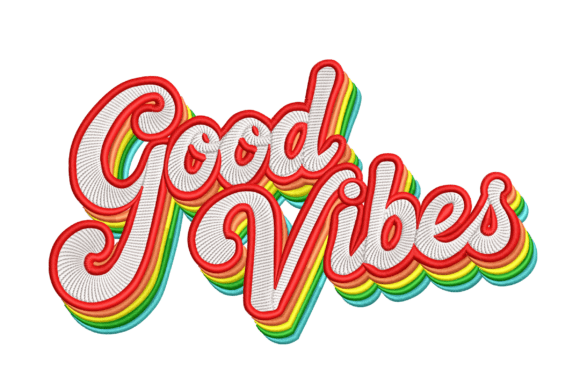
As an embroidery designer who’s digitized over 2,000 small business assets—from café aprons to florist tote bags—my first take on Good Vibes Retro is immediate: it’s warm, approachable, and rooted in genuine character. The groovy, script-based 1970s font isn’t just nostalgic—it reads as intentional, human, and handmade. That textured white satin or chenille-like finish (as described) suggests depth and tactility, not flat digital filler. For a boho-aligned brand—think a ceramic studio, indie bookstore, or plant shop—it lands as professional *and* personable. It avoids the sterility of modern sans-serifs while sidestepping the kitsch of overdone retro clichés. That balance is rare—and valuable.
Where Good Vibes Retro Shines in Real Business Use
This machine embroidery design excels where authenticity and emotional resonance matter most. On embroidered patches? Absolutely. Its flowing script holds up beautifully at 2.5"–3.5" sizes—ideal for sew-on branding on denim jackets, tote bags, or boutique packaging. As a chest logo on staff uniforms or aprons, Good Vibes Retro adds subtle personality without overwhelming function. I’ve used similar scripts for a local bakery’s linen aprons—and customers consistently comment on how “inviting” the branding feels.
For cap embroidery, position it cleanly on the front panel (not curved sides), and it reads clearly at standard 2" width. On cotton tote bags or canvas market sacks, it anchors the design with organic rhythm—no stiff alignment needed. As a sleeve detail on work shirts or a subtle tag on handmade product packaging, it reinforces brand identity without shouting. Etsy sellers especially benefit: this digital embroidery file pairs seamlessly with printable mockups, helping buyers visualize the finished product before purchase. And because it leans into texture—not sharp geometry—it complements natural fabrics like linen, unbleached cotton, and brushed twill far better than rigid fonts.
Use With Intention: Key Considerations for Commercial Embroidery
Like any script-based embroidery file, Good Vibes Retro demands thoughtful placement. Avoid scaling it below 1.75" wide—tight curves and fine connections risk stitch collapse or thread breakage on small patch sizes. Cap fronts are safe; curved bill edges or tight gussets? Not ideal. Similarly, dark uniforms require high-contrast thread colors—test white or ecru satin-stitch threads over navy or charcoal to ensure legibility after repeated washing.
Fabric texture matters. Highly napped or loosely woven materials (like some burlaps or heavy fleece) can obscure delicate outlines. Always pair Good Vibes Retro with medium-weight cutaway stabilizer—not tear-away—to support the satin-stitch texture and prevent puckering. And never skip the fabric test: run a sample on your actual garment or patch base before full production. What looks crisp on screen may soften or bleed on real-world substrates.
How It Strengthens Brand Identity and Customer Trust
Small businesses don’t just sell products—they sell feeling. Good Vibes Retro communicates warmth, care, and intentionality. When stitched onto a florist’s reusable bouquet wrap or a pet brand’s bandana, it signals that the business values craft, not just convenience. That perception lifts perceived value: customers pay more for merchandise that feels curated, not generic. Visually, it builds recognition across touchpoints—a consistent script across aprons, caps, and tote bags creates cohesion without rigid repetition. And because it reads as handmade (even when machine-embroidered), it aligns naturally with artisanal positioning—boosting buyer engagement and social sharing.
Practical Designer Notes Before You Digitize or Stitch
- Always test in black and white first: Confirm letter spacing and curve integrity without color distraction.
- Verify small-size performance: Resize to your smallest intended use (e.g., 1.8" wide patch) and check for stitch continuity in the “o” and “v” loops.
- Review thread color contrast carefully: White-on-navy works—but ivory-on-charcoal may fade visually. Match thread luster (matte vs. glossy) to your brand’s tactile language.
- Inspect kerning and baseline flow: Uneven spacing kills script readability. Ensure “Good” and “Vibes” breathe together, not apart.
- Confirm hoop size compatibility: Most versions will fit standard 4x4 hoops—but verify before batching orders.
- Test on real fabric + stabilizer combo: A 100% cotton tee behaves differently than a poly-cotton blend. Don’t assume.
- Create a client-approved mockup: Show Good Vibes Retro stitched on your exact garment type—not just a stock image.
- Compare beside existing design assets: Does it harmonize with your logo, icon marks, or secondary typography—or compete?
- Confirm commercial licensing: This is a digital embroidery file intended for small business merch and commercial embroidery—ensure your source grants rights for resale and branded product use.
Final Thought: More Than a Design—It’s a Brand Tone Setter
Good Vibes Retro isn’t just another embroidery file. It’s a tone-setting tool—one that quietly tells customers, “We’re grounded, joyful, and proud of what we make.” For boho-aligned shops, creative studios, and hands-on brands, it bridges retro charm with modern clarity. Used intentionally—with attention to scale, fabric, and context—it elevates custom apparel from functional to memorable. Whether you’re stitching 50 aprons for a new café or creating limited-run patches for an Etsy launch, Good Vibes Retro delivers both visual appeal and strategic brand value. Just remember: great embroidery starts with smart decisions—not just beautiful files.