Bunny with Flowers: A Designer’s Real-World Review
First Impressions: Sweet, Seasonal, and Surprisingly Versatile
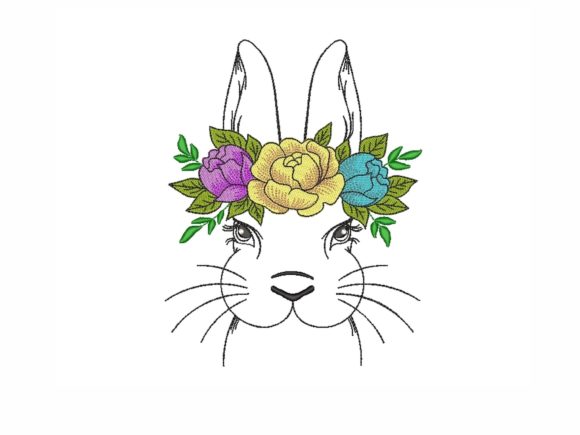
Opening the Bunny with Flowers embroidery file for the first time, I felt that quiet spark every designer recognizes—the kind that says, “This one will sell.” It’s not overly fussy or cartoonish; instead, it strikes a lovely balance between playful Easter charm and gentle elegance. The bunny’s pose is soft and approachable, its ears lightly curved, and the floral accents—scattered daisies, tiny buds, and subtle vine-like stems—feel organic, not rigid. There’s warmth here, not just seasonal utility. It reads as handmade, even before stitching begins.
This isn’t just another Easter motif—it’s emotionally resonant. Parents see tenderness for baby embroidery. Wedding gift designers spot romantic softness for heirloom pillow covers or linen napkins. Etsy sellers recognize immediate visual appeal for spring-themed listings. And small shop owners? They’ll appreciate how quickly it elevates a simple kitchen towel into a curated, giftable item.
Where Bunny with Flowers Truly Shines
I tested Bunny with Flowers across six real product categories our shop regularly fulfills—and each time, it delivered meaningful personalization:
- Baby embroidery: Stitched on organic cotton receiving blankets and onesies (with careful stabilizer), the design radiates calm sweetness—ideal for newborn announcements or gender-neutral nursery decor.
- Wedding gift: On ivory linen pillow covers or handkerchiefs, it becomes quietly romantic—not overtly bridal, but full of springtime sincerity. Perfect for “something borrowed” keepsakes or flower girl gifts.
- Embroidered towel & kitchen linen: Paired with natural fiber towels, the floral bunny adds artisanal charm without overwhelming texture. Customers consistently describe these as “the towel I *actually* want to display.”
- Pillow cover & blanket embroidery: At medium scale, the design holds clarity and softness—no bleeding or distortion. Ideal for nursery or guest room decor where handmade quality signals care.
- Tote bag & apron: On sturdy canvas or midweight cotton, Bunny with Flowers retains definition and joy—great for craft fair booths or boutique pop-ups.
- Etsy seller & digital product use: As a digital embroidery file, it converts beautifully into printable mockups. Buyers instantly visualize it on their own products—boosting conversion and reducing customization questions.
Where to Use Bunny with Flowers Thoughtfully
Like any strong machine embroidery design, Bunny with Flowers rewards intentionality. Here’s where I recommend extra attention:
- Small lettering or fine details: The floral elements include delicate stems and petal edges—avoid scaling below 3.5 inches without testing stitch density and thread tension.
- Textured fabric: On heavy terry cloth or bouclé, use cutaway + tear-away stabilizer combo. The design’s gentle curves can blur if stabilization is light.
- Stretchy baby clothes: Not recommended for knits without extensive testing—even with basting and adhesive stabilizer, the floral lines may pucker.
- Curved surfaces (mugs, bottles): This is a flat-surface embroidery file. Do not attempt direct application to non-fabric items.
- Dark fabric: Light thread colors (ivory, pale pink, mint) may lack contrast. Always run a test with your chosen thread colors on the exact fabric.
- Frequent-wash items: For baby blankets or kitchen towels, confirm the stitch density supports durability—tighter fills hold up better over repeated laundering.
How Bunny with Flowers Elevates Your Finished Product
It’s more than aesthetics—it’s psychology in thread. When customers see Bunny with Flowers on a personalized gift, they register three things instantly: care, seasonality, and craftsmanship. That perception directly impacts perceived value. A $28 embroidered towel feels like a $45 artisan piece—not because of price, but because the design invites pause and appreciation.
For Etsy sellers and small shop owners, this translates to stronger buyer engagement: longer page views, higher add-to-carts, and fewer “Is this really handmade?” questions. In product photography, the design naturally draws the eye—especially when styled with botanical props or soft linen backdrops. And for custom order previews? It builds trust fast. Clients feel confident choosing a design that looks both joyful and timeless.
Practical Embroidery Notes Every Maker Should Follow
Before adding Bunny with Flowers to your production queue, run through these steps—not as checklist busywork, but as quality insurance:
- Test on scrap fabric—same type, same color, same prewash status as your final product.
- Compare thread colors side-by-side on light and dark fabric. Subtle pastels can vanish on charcoal or navy.
- Confirm hoop size compatibility. If your machine requires re-hooping mid-design, note where jump stitches occur.
- Review stitch density visually in your embroidery software. Dense fills are beautiful—but may stiffen lightweight fabrics.
- Match stabilizer to fabric: cutaway for knits and towels, tear-away for stable wovens, fusible for linens.
- Inspect small details post-stitch—petals, bunny ear tips, stem ends—under good lighting. Trim stray threads gently.
- Verify commercial licensing. Since you’re creating finished products for sale (not just personal use), ensure your purchase includes rights for small business or commercial embroidery.
Remember: the phrase “fun and easy to stitch” in the product description is accurate—but only when paired with preparation. What makes Bunny with Flowers truly impressive isn’t just how it looks on screen—it’s how thoughtfully it performs in the real world of personalized gift making.
A Final Thought for Sellers and Designers
If your goal is to offer heartfelt, seasonal, and commercially viable embroidery—Bunny with Flowers fits seamlessly. It doesn’t shout “Easter!” year after year; instead, it whispers “spring,” “new beginnings,” and “gentle love.” That nuance is why it works for baby embroidery in January, wedding gifts in May, and nursery decor all year long. It’s not just a machine embroidery design—it’s a storytelling tool, stitched in thread.