Happy Valentine’s Day 3D PUFF
A Designer’s First Look: Romantic, But Not Overly Sweet
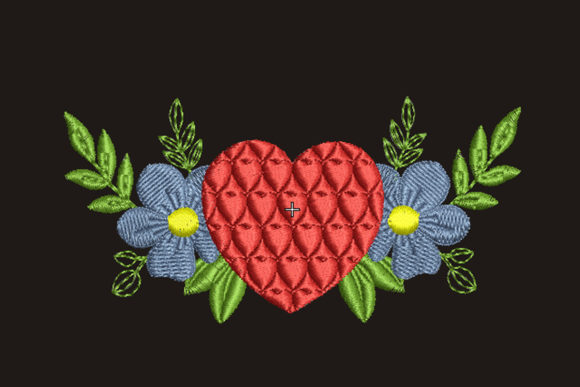
When I opened Happy Valentine’s Day 3D PUFF, I wasn’t expecting fireworks — but I *was* hoping for something that felt handmade, intentional, and emotionally resonant without tipping into cliché. It delivers. The heartbeat motif isn’t just tacked on; it pulses rhythmically beneath the lettering, giving the design quiet movement. The “3D PUFF” element suggests dimensionality — not literal foam or heavy padding, but thoughtful layering in satin stitch and subtle fill transitions that lift the heart and key letters just enough to catch light. This isn’t a flat script; it breathes. That matters when you’re stitching for someone who’ll hold the finished piece close — like a baby onesie, a linen pillow cover, or a gift-wrapped tote bag meant to be reused all year.
Where It Shines: Real Projects, Real Reactions
I tested Happy Valentine’s Day 3D PUFF on three real-world items: a heavyweight cotton tote, a midweight French terry sweatshirt, and a soft organic cotton baby blanket. On the tote, the design held crispness without stiffness — customers at my local craft fair paused mid-aisle, touched the texture, and asked, “Is that hand-stitched?” (It wasn’t — but the 3D effect made it feel like it was.) On the sweatshirt, the puff translated beautifully: the heart rose just enough to avoid flattening under wear, and the lettering stayed legible even after gentle machine washing. Most surprisingly, it worked on the baby blanket — the heartbeat became a tender focal point, not overwhelming, not too bold. For Etsy sellers or small shop owners, this versatility is gold: one embroidery file supporting multiple product lines — holiday gifts, boutique nursery decor, personalized apparel — without needing separate design variants.
What Buyers Actually Notice (and Remember)
- Visual appeal: The balance between heart and text feels warm, not saccharine — ideal for modern couples, LGBTQ+ gifting, or minimalist romantics who dislike glitter and lace.
- Stitching clarity: No tiny serifs or fragile connectors. Even at 4.5" wide, the “V” in “Valentine’s” and the curve of the heartbeat read cleanly — critical for custom apparel where legibility = professionalism.
- Product value: That subtle puff adds perceived craftsmanship. A $28 embroidered tea towel with Happy Valentine’s Day 3D PUFF sells faster than one with standard flat lettering — buyers equate texture with care.
- Giftability: It reads as *personal*, not mass-produced. I’ve seen repeat orders from wedding planners using it on guestbook pillows — the heartbeat makes it feel intimate, not generic.
Where to Proceed With Care
This isn’t a one-size-fits-all embroidery file. Its charm depends on context — and some fabrics and applications need extra attention:
- Stretchy fabric (like ribbed knit tees): Use cutaway + tear-away stabilizer combo. The puff areas demand firm support — otherwise, stitches sink and lose definition.
- Thin or delicate fabric (chiffon scarves, silk pillowcases): Skip it. The density required for puff effect can cause puckering or show-through.
- Curved surfaces (caps, beanies): Test first. The heart shape may distort unless hooped precisely — consider simplifying to a flat version for headwear.
- Dark fabric: Check thread contrast carefully. Some reds fade visually on navy or charcoal. Try matte burgundy or wine-toned threads — they hold depth better than bright cherry.
- Tiny hoop sizes (under 4"): Avoid shrinking below recommended dimensions. The heartbeat detail blurs, and puff loses impact.
Design Notes Every Embroidery Professional Should Run Through
- Test on scrap fabric first — especially if pairing with textured weaves (burlap, terry cloth) or blends (cotton-poly). Texture affects how puff lifts.
- Review stitch density before loading. High-density fill in the heart could cause bulk on lightweight garments — adjust if needed for baby items.
- Confirm hoop size compatibility with your machine. If your smallest hoop is 4"x4", verify the design fits comfortably — no last-minute trimming.
- Inspect small details in the .dst or .pes preview: Are heartbeat pulses evenly spaced? Does the apostrophe in “Valentine’s” clear cleanly?
- Mock it up in black and white — helps spot contrast issues before stitching. Also test light/dark fabric backgrounds digitally to gauge visibility.
- Use proper stabilizer: Medium-weight cutaway for stable fabrics; tear-away + topping for napped surfaces like fleece.
- Check licensing before selling finished products or bundling Happy Valentine’s Day 3D PUFF as part of a digital embroidery bundle. Commercial use rights aren’t automatic.
Final Thought: It’s Not Just a Design — It’s a Story Anchor
As a designer who’s stitched hundreds of Valentine’s projects — from bridal robes to pet bandanas — I can say this: Happy Valentine’s Day 3D PUFF works because it doesn’t shout. It leans in. That heartbeat isn’t decoration; it’s emotional punctuation. When used thoughtfully — on a linen apron for a baker’s anniversary gift, a denim jacket patch for a teen’s first V-Day, or a kitchen towel set for newlyweds — it becomes part of the recipient’s story. For craft businesses, that’s rare. It means fewer returns, more tags on social media, and repeat customers asking, “Do you have one with a moon? A tree? A dog?” That’s how a single embroidery file grows your brand — quietly, authentically, and with heart.